
Over half of AI startups never made it past proof-of-concept last year. The current moment in Silicon Valley stirs up equal parts ambition and anxiety. A new generation of founders is closing rounds, assembling teams at speed, and generating serious noise around AI ventures. But the gap between imagining a technology-driven future and actually building a business that sustains itself on revenue is wider than most people admit.
Olivier Club keeps bringing together the sharpest minds through its series of intimate discussions, this time in partnership with AngelList — conversations that go beyond the SF founder bubble and touch on what technology means for the world at large.
Physical AI is the part of this story that changes the math for your cap table.
As Jason Lu frames it: “It is a concentrated, deliberate effort on the part of a robotics builder to build a version of your robot that can get revenue today.”
Intention is everything here. The founders who struggle are often the ones chasing a decade-long vision so intently that they walk right past the customer already waiting for them — one who would pay for the product as it exists today.
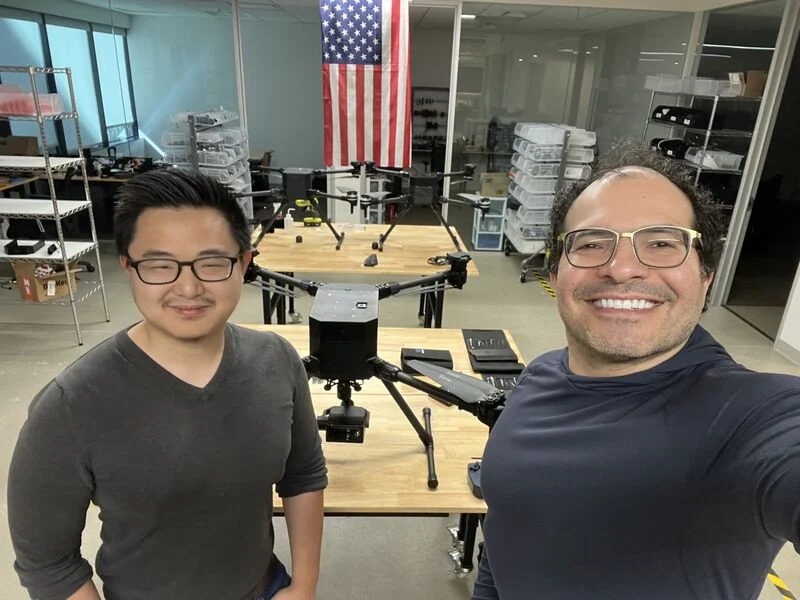
Jason H. Lu is the Founder and CEO of Flyby Robotics. Raised $4.6M in a pre-seed funding round. Built a team of talent from Yale and NASA. Closed a deal with Palantir. Supplies U.S. military clients. Flyby Robotics has achieved 7-figure revenue.
Revenue Over Hype
Hardware founders get stuck in the same pattern: they optimize for the far horizon and miss the near-term buyer. Flyby’s earliest customers were AI developers and researchers — people with capital to spend, appetite for experimentation, and no requirement for enterprise-grade reliability. The sweet spot between what the technology can deliver now and who has an urgent need for exactly that — that’s where real traction begins.
Fernando offers the counterpoint with a longer lens. Amazon bled money for years. OpenAI only broke even in 2024. What Silicon Valley is actually betting on isn’t this quarter’s numbers — it’s whether a team can compound genuine value across a decade.
Neither view is wrong. Knowing how to hold both at once — monetize today, build toward tomorrow — is the real craft.
Why Physical AI Wins
Fernando’s case for physical AI over software AI comes down to Pareto’s Law. A fifth of what we do generates four fifths of the result. Everything else is repetitive, manual, and draining — work that people tolerate rather than choose.
Software cannot lift an object. It cannot navigate a sensor through a building that has lost its signal. It cannot run a security sweep at 2am. Physical AI can do all of it.
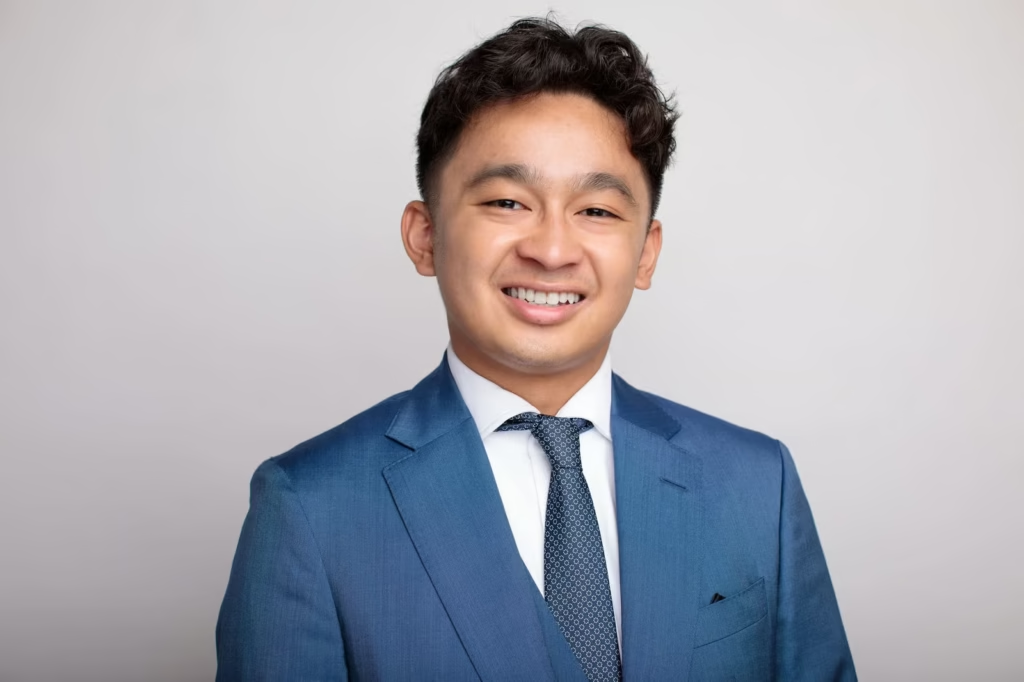
Fernando Lorenzo is the Founder and Managing Director of Universal AI Services, an AI and Robotics marketplace that allows anyone to buy, sell, rent, repair, or design robots from scratch. Built a team of talent from Harvard and MIT. Board member of the Harvard SF alumni society.
The Breaking Point
Both founders were asked the same question: when did the company actually start to move?
Replicability.
“We built one, it works. We built five, six, seven, eight — every single one is working. That is the moment,” Jason said. Until that point, every new customer carries risk. Once you’re past it, every new customer builds on the last.
Fernando’s inflection point was a different kind of story. He wound up in a hospital bed during CES — running on three hours of sleep, heart rate at 180. He doesn’t recommend the approach. But that conference showed him the true geography of demand: hotel operators in Las Vegas, security companies in Manhattan, agricultural businesses in Kenya — all circling the same problems. The appetite for physical automation is quiet, widespread, and persistent. That combination is what gives it staying power.
How to Get the Deal When You Have Nothing
Jason’s approach to building strategic partnerships from the ground up:
“Identify the intersection of what the technology is capable of today and what an end user urgently needs. When those two things overlap — when an end customer says ‘this is going to save lives right now’ — partnerships become solidified.”
There is no workaround. It comes down to taking customer discovery seriously.
Fernando’s angle is about increasing surface area. Be present. Seek out people who know more than you. Build spaces where others can share what they know. Fortune favors the founders who engineer more of the right collisions — luck follows proximity to the right people.
To Every Founder
If you are working on something difficult, something tangible, something the market hasn’t caught up to yet — don’t stop. The obstacles ahead of you are real, and so is the person waiting on the other side who genuinely needs what you’re building. Stay consistent, identify who will pay you today, get your first unit working and then replicate it eight times over, and keep your eyes on the legacy you want to build — not just the liquidity event. The founders who get there are rarely the most gifted people in the room. They’re simply the ones who kept showing up.
This conversation was hosted by Olivier Club in partnership with AngelList at their San Francisco office. Olivier Club runs private discussions for frontier founders and investors.

Ivan Vavryk
Written by